
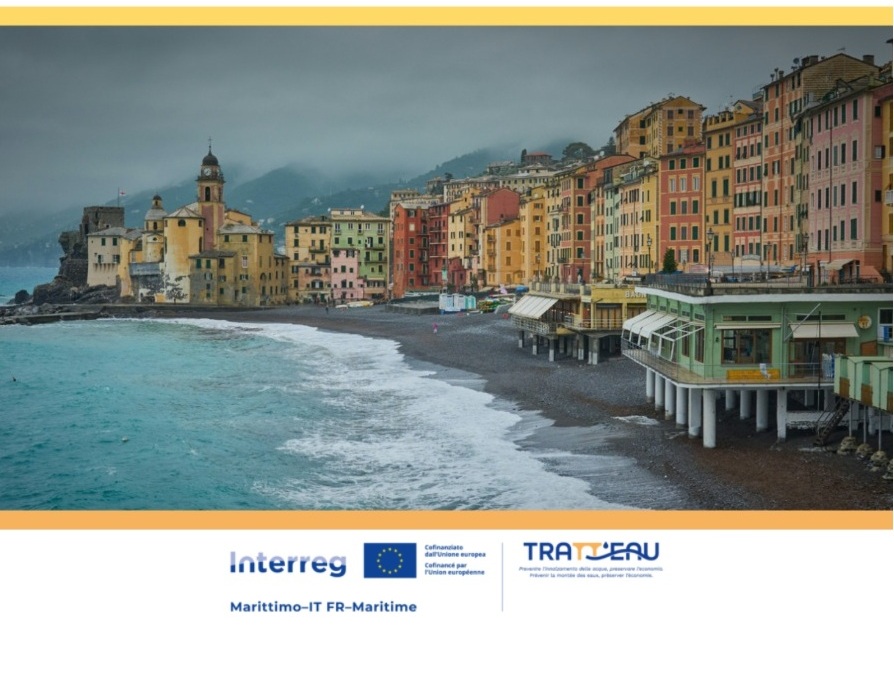
Coastal Retreat: Obstacles, Barriers and Levers for Action by Public Decision-Makers in France & Italy
Mediterranean Coastlines on the Front Line
Over the course of this century, sea level rise, an inevitable phenomenon that is already under way, will transform coastal territories and their economies. In the Mediterranean, 150 million people live along the coast (40% of the population), and coastal tourism alone accounts for more than 11% of the region’s GDP.
The stakes are considerable. By 2100, €11.5 billion worth of assets on the French Mediterranean coast will be exposed to coastal risks. In Italy, up to 40% of beaches could disappear, and half of the country’s port infrastructure and more than 10% of its farmland will be threatened by submersion.
France and Italy, Shared Challenges
Faced with these risks, the attractive and dynamic coastlines of France and Italy must undergo profound change. In France, the Climate and Resilience Law has recognised “territorial recomposition” (including relocation) as a response to erosion and marine flooding. In Italy, the dominant approach remains defence against the sea: beach nourishment, protective structures and sediment management.
Yet despite this acknowledged need to act, relocating activities out of threatened areas remains marginal in both countries. Public authorities recognise it as an option, but only very rarely put it into practice.
The Questions at the Heart of the Report
How can local public decision-makers be encouraged to take action? What obstacles explain the small number of relocations carried out to date? What prospects exist to facilitate territorial recomposition?
The European project TRATT’EAU (Interreg Marittimo IT-FR programme) addresses these challenges. It is a French-Italian partnership led by CCI Nice Côte d’Azur (lead partner), together with CCI Liguria, SMIAGE, the Bastia Urban Community, the Province of Massa-Carrara, the University of Cagliari and AVITEM. The project develops mapping, analysis, land-use planning and awareness-raising tools to help public decision-makers adapt coastal territories in a sustainable way.
As part of this project, AVITEM is publishing the report “Relocation of Economic Activities in the Face of Coastal Retreat: Obstacles, Barriers and Levers for Action by Public Decision-Makers”. It draws on interviews with public decision-makers, funders, engineering bodies and economic stakeholders in five territories: the Alpes-Maritimes, Bastia, Massa-Carrara, La Spezia and the Gulf of Oristano.
Read the report
This report is intended for elected officials, local authority departments, economic stakeholders and everyone working on the adaptation of coastal territories. It combines the sociology of public action with behavioural science.