The Territoires Cultivés booklets, developed through a collaborative process, serve as practical and reflective resources to drive territorial transitions.
Culture as a lever for ecological and territorial transition
Launched in October 2023 under a call for projects by the French Ministry for Europe and Foreign Affairs, the Territoires Cultivés project brings together four partner authorities: Nice Côte d’Azur Metropolis, City of Vitrolles, Corsican Regional Authority, Metropolitan Municipality of Izmir (Türkiye).
Through Open Forums and an International Symposium, the project fostered experimentation, dialogue, and co-creation among stakeholders in territorial transition and culture. It culminated in the signing of the Manifesto of Cities of Culture and Ecology and the production of four thematic booklets action and reflection guides to make culture a lever for territorial transition.
Since January 2025, the project has been supported by a consortium of experts – Maud Le Floch, Jean-François Chougnet, Valérie Astesano, Amine Benaissa, and Cleo Smits -to draft the deliverables and contribute to collective intelligence.
Aligned with the spirit of the New European Bauhaus, the project promotes the alliance between aesthetics, sustainability, and inclusion.
Booklets for Action: Culture in the Service of Territorial Development
The four booklets, born from the exchanges and reflections throughout the project, showcase the richness of the collaborations that emerged from this collective adventure. They offer keys to action and rethinking culture’s role in the Mediterranean.
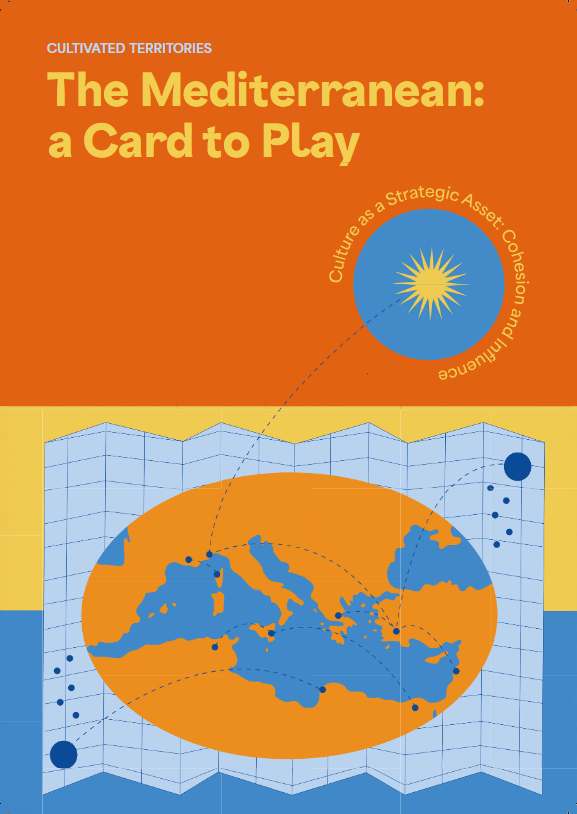
Booklet 1: The Mediterranean as a Strategic Asset
At a time when global power dynamics are shifting, how can the Mediterranean’s cultural history inspire its future?
This booklet explores the Mediterranean far beyond its geographical borders: a space of flows, circulation, and imaginaries, with multiple and evolving representations.
Here, culture is not a static museum heritage but a living creative force – a geopolitical lever to strengthen coexistence between its shores and an essential tool in facing ecological challenges.
The Mediterranean, the world’s most polluted sea, is warming 20% faster than the global average (IPCC, 2022), while hosting 7–10% of the world’s marine biodiversity on just 0.8% of the ocean’s surface.
Building on the concept of “Mediterraneity” a shared cultural and political identity—Territoires Cultivés proposes constructing a Mediterranean narrative, driven particularly by artists and younger generations, for a Mediterranean that thinks, asserts, and reinvents itself collectively.
Booklet 2: Culture as Territorial Engineering
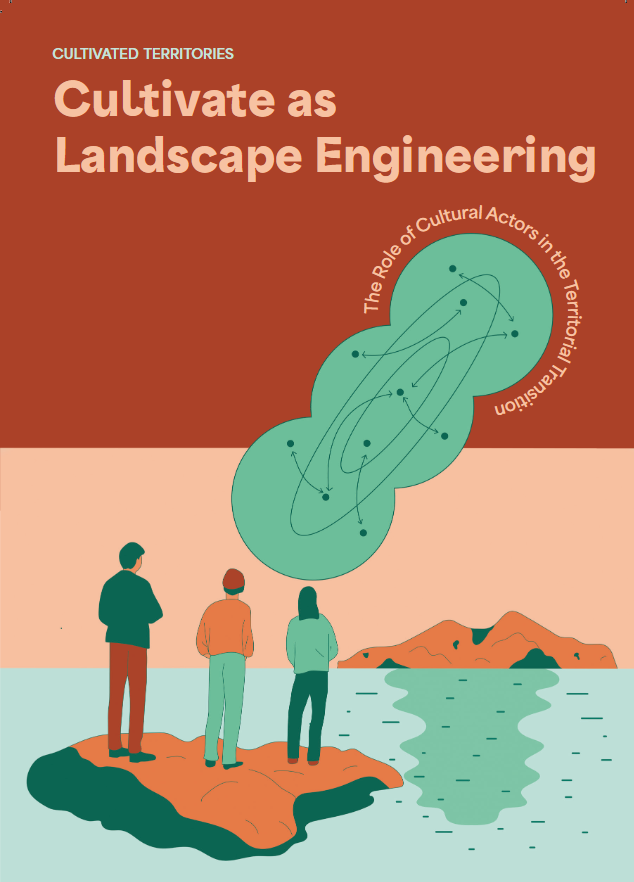
How can cultural governance methods transform the ways territorial transition stakeholders operate?
As Mediterranean territories face unprecedented ecological, social, and economic challenges, culture is no longer merely a support for territorial projects. It has become a central actor, a full-fledged engineering of connections. Its strengths?
- Diagnosis and design: Artists detect what conventional tools overlook – weak signals, buried memories, hidden potential.
- Ecological best practices: The cultural sector already experiments with sobriety, reuse, and circular economy, inspiring other fields.
- Operational skills: Improvising, acting under uncertainty, crafting collective narratives.
- Audience engagement: Culture turns spectators into actors, creates communities of experience, and paves the way for shared governance.
Cultural stakeholders are becoming indispensable allies for urban planners and developers.
Booklet 3: Towards a Laboratory for Culture and Transition Projects
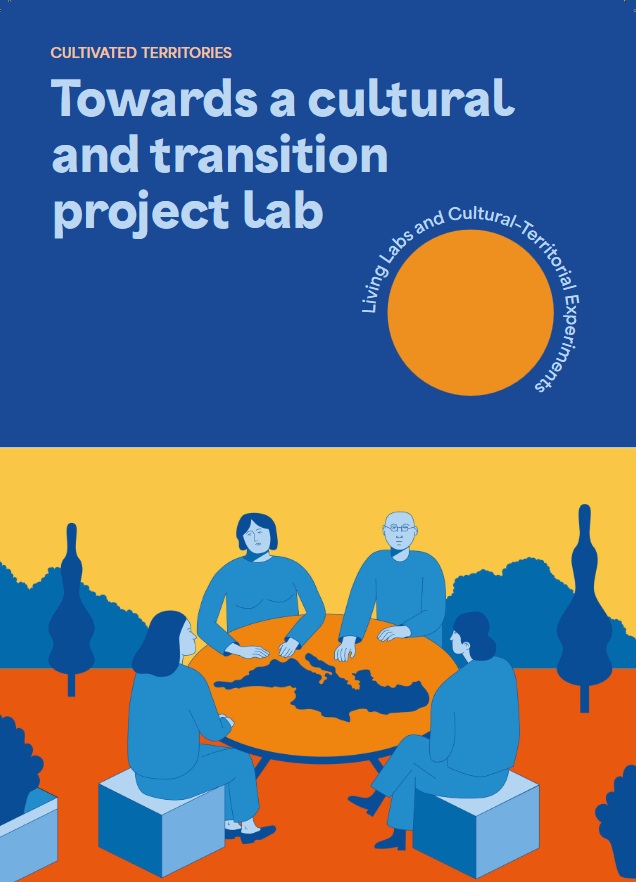
Inspiring and empowering Mediterranean planners: when culture meets development to build projects.
This booklet outlines inspiring pathways to create Living Labs – laboratories where cultural, artistic, ecological, and planning practices interact to invent new forms of territorial engineering.
Emblematic inspirations from the Territoires Cultivés Forums:
- In Corsica, a mechanism mobilising cultural stakeholders to rethink a landscape plan.
- In Izmir, culture supports the ecological transformation of a regenerating neighbourhood by integrating artists into citizen participation processes.
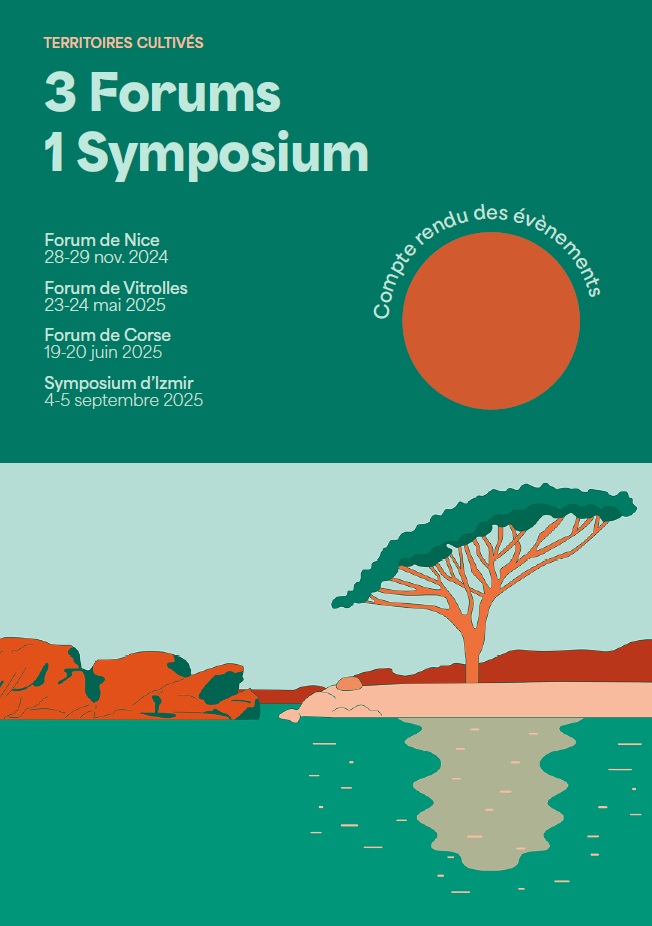
Booklet 4: 3 Forums, 1 Symposium
Mediterranean cultures and landscapes: a historic territorial interaction that can inspire today’s demand for ecological transition.
Booklet 4 of Territoires Cultivés captures the energy of the project’s forums and final symposium. Elected officials, artists, researchers, citizens, and planners joined their expertise, sensitivities, and experiences to create a community committed to ecological transition through and with culture: the Manifesto of Mediterranean Cities of Culture and Ecology.
- How a photojournalist tells the story of Izmir’s landscapes.
- How contemporary Mediterranean art sounds the alarm for territorial developers.
- How Nice’s history of seasonal residence has shaped gardened hills that contribute to the territory’s resilience.
- How the artistic enhancement of Corsica’s chestnut trees reconnects with the territory’s ecological capacity.
Join the community and sign the Manifesto of Mediterranean Cities of Culture and Ecology.