In the face of increasingly intense heatwaves, adapting cities has become a major challenge for Mediterranean territories.
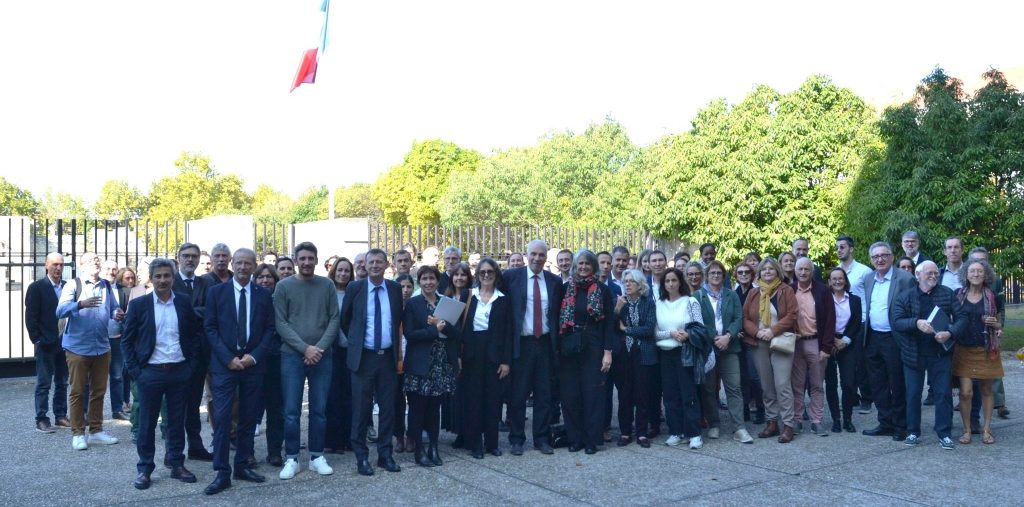
On October 16, 2025, in Avignon, the COP du Vaucluse – the second territorial meeting of Ecological Planning – brought together elected officials, technical staff, and local stakeholders around this priority issue. The event was co-organized by the Prefecture of Vaucluse and the Sud Region – Provence-Alpes-Côte d’Azur, and facilitated by the Rhône Avignon Vaucluse Urban Planning Agency.
At the opening of the day, AVITEM shared feedback from Mediterranean cities already confronted with extreme heat, highlighting concrete urban adaptation strategies capable of inspiring transformation in Vaucluse by 2050: public space design, nature-based solutions, consideration of vulnerable populations, and transformation of productive models.
This meeting illustrates the collective determination to anchor the ecological transition in local realities, by mobilizing the tools of the SRADDET and the levers of the regional COP.
A particularly exposed Mediterranean context
The Mediterranean is now identified as one of the world’s climate change hotspots. Rising temperatures, more frequent heatwaves, intensification of extreme rainfall, and growing pressure on natural resources profoundly challenge our development models.
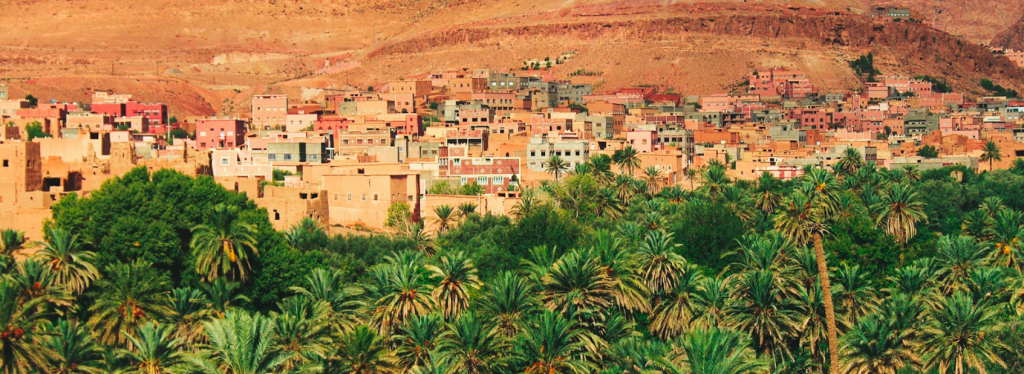
Yet this region also carries a long history of climate adaptation. Vernacular urban forms, such as the ksar of Tafilet in Morocco, demonstrate effective strategies based on architecture, water management, shade, and urban compactness.
From “maladaptation” to a paradigm shift
Conversely, recent urban dynamics have often increased territorial vulnerability: soil sealing, metropolization and coastalization, urban models poorly adapted to local climates, and the neglect of hydrography and risk memory.
In the era of climate change, these choices raise major issues of health, comfort, and resilience, making it necessary to place the geographical foundation back at the heart of projects. This involves revaluing non-built spaces, recognized for their ecosystem services—rainwater infiltration, urban cooling, ecological continuity—and adopting a multi-scale approach to adaptation.
From development projects to metropolitan strategy
The Casa Anfa urban park (Casablanca) illustrates the key role of urban planning in combating heat islands: vegetation, permeable soils, and shading help create more livable and resilient public spaces.
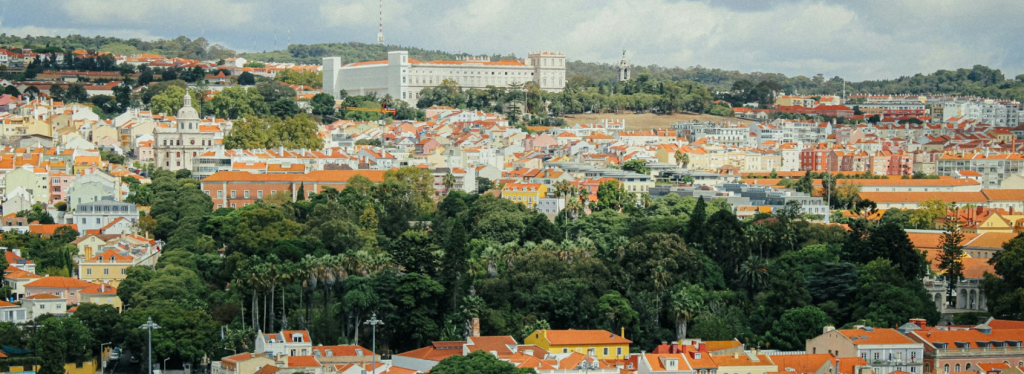
At another scale, the Lisbon metropolitan area – particularly exposed to heatwaves and flooding – has embarked on an integrated adaptation strategy structured around two priorities: stormwater management and combating heat through a multi-level renaturation strategy.
Beyond technical solutions, these approaches embody a genuine political and societal project, aimed at protecting populations, mobilizing stakeholders, and developing a shared culture of climate adaptation.
The key role of international cooperation: the Cool Noons project
This logic of exchange and mutual learning underpins the European project Cool Noons, led by AVITEM and a partnership bringing together nine actors: five pilot cities (Lisbon, Marseille, Imola, Dubrovnik, and Budva) and two universities (the American College of Greece and the University of Coimbra).
The project addresses a central question: how can we adapt our cities to extreme temperatures by rethinking the way we visit and experience public spaces during the hottest hours?
Based on a citizen-participation approach (exploratory walks, co-design workshops) and a scientific methodology for evaluating impacts in terms of comfort, uses, and satisfaction (qualitative and quantitative surveys), Cool Noons develops:
- Cool Paths: shaded and designed urban routes offering itineraries that combine thermal comfort and tourist appeal.
- A catalogue of cooling solutions: urban furniture, access to drinking water, increased biodiversity, enhancement of cool spots, etc.
A joint strategy and shared action plan aim to strengthen the adaptation of urban tourism to climate change, improve the quality of life for residents and visitors, and collectively raise awareness of rising temperatures and ways to protect against them.
Drawing inspiration to better prepare
In the face of climate change, international cooperation is an essential lever.
Drawing inspiration from territories already exposed to extreme heat, cross-fertilizing experiences, and disseminating good practices make it possible to build Mediterranean cities that are more resilient, more livable, and more supportive.